
-
Hosting
Business Cloud
-
Unmanaged VPS
Managed VPS
Dedicated Servers
-
Network & Security
Managed Services
-
Buy & Colocate Servers
Infrastructure Services
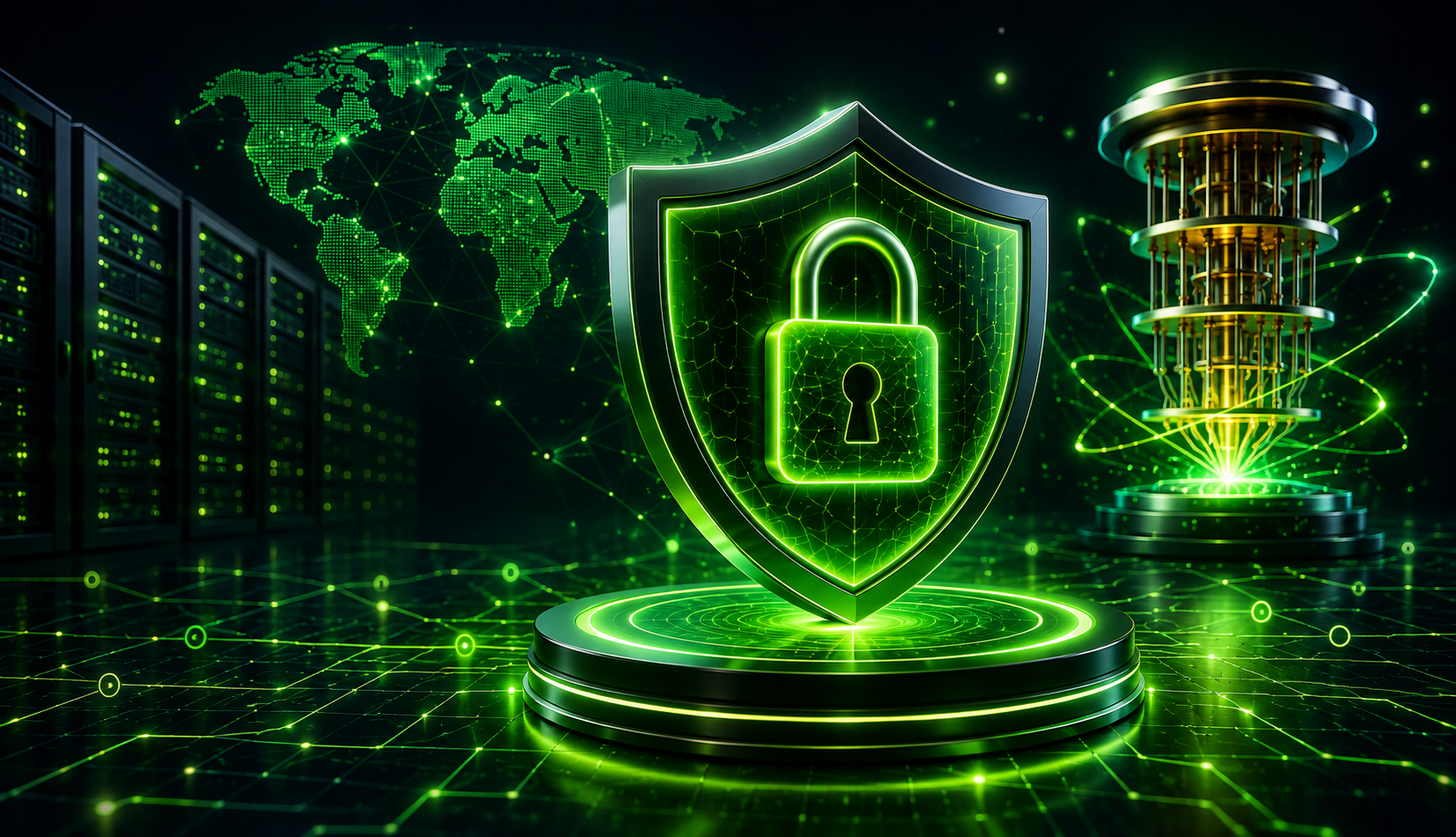
Post-Quantum Encryption: Is Your Website Ready for the Next Security Shift?
Quantum computers can't break today's encryption yet — but the data being stolen right now could be decrypted the moment they can. Here's why 2026 is the year "quantum-safe" stopped being science fiction.
Every major hosting and security trend report for 2026 now includes the same warning: post-quantum security has moved from a research topic to an active business risk. Industry analysts describe 2026 as the year the internet shifted from selling "space and speed" to providing "intelligence and sovereignty" — and quantum-readiness is a big part of that shift.
If that sounds abstract, here's the concrete version: encrypted data being intercepted and stored today can potentially be decrypted once quantum computers mature. This isn't a someday problem — it's a right-now problem for any data that needs to stay confidential for years.
What "Post-Quantum" Actually Means
Today's SSL/TLS certificates rely on encryption (like RSA and ECC) that's effectively unbreakable by classical computers — but theoretically vulnerable to a sufficiently powerful quantum computer. Post-quantum cryptography (PQC) refers to new encryption algorithms specifically designed to resist attacks from quantum computers, not classical ones.
Standards bodies have already finalized several post-quantum algorithms, and browsers and certificate authorities are beginning to support hybrid certificates that combine classical and quantum-resistant encryption during the transition period.
"Harvest now, decrypt later": this is the attack pattern driving urgency. Bad actors are already capturing encrypted traffic today, betting they'll be able to decrypt it once quantum computing catches up. If your business handles data with long-term sensitivity — health records, financial data, legal documents — that data is at risk right now, even though the decryption tech doesn't fully exist yet.
What's Pushing This to the Top of the Agenda
Regulatory Pressure
Regulations like the EU AI Act are pushing compliance and data-sovereignty requirements that increasingly factor in long-term encryption resilience.
Zero-Trust Architecture
Every access request — internal or external — is now continuously verified, replacing the old idea of a trusted network perimeter.
AI-Powered Threat Detection
Machine learning models now monitor traffic patterns and automatically respond to anomalies, from DDoS attempts to unusual data access.
Managed Security Services
Hosting providers are increasingly offering security as a built-in service rather than an optional add-on — monitoring, detection, and response bundled in.
Classical Encryption vs. Post-Quantum Encryption
| Aspect | Classical (RSA/ECC) | Post-Quantum (PQC) |
|---|---|---|
| Secure against classical computers | Yes | Yes |
| Secure against quantum computers | No — theoretically breakable | Yes — designed specifically for this |
| Current adoption | Universal, default today | Early — hybrid rollout underway |
| Best for | Short-lived, low-sensitivity data | Long-term sensitive data (health, finance, legal) |
How Businesses Should Prepare Right Now
Inventory your sensitive, long-lived data
Identify what needs to stay confidential for 10+ years — that's your highest "harvest now, decrypt later" risk.
Ask your host about hybrid certificate support
Some certificate authorities already offer hybrid classical + post-quantum certificates — check if yours does.
Adopt zero-trust access controls
Move away from perimeter-based trust and toward continuous verification for every access request, internal or external.
Keep every certificate current
With SSL certificate validity now capped at 200 days, staying current on renewal is also your easiest path to picking up new security standards as they roll out.
Choose a host that's already tracking this
Quantum-readiness shouldn't be something you research alone — your infrastructure provider should already have a plan.
Where HostGraber Fits In
You don't need to become a cryptography expert to stay ahead of this shift. HostGraber builds security into every layer of your hosting plan:
- Free SSL bundled with automatic renewal — no lapses, no manual tracking
- Infrastructure monitored for emerging threats, not just yesterday's
- Secure, isolated environments ready for zero-trust setups
- OV/EV certificate options for businesses that need stronger identity verification
- 24/7 technical support when compliance questions get complicated
Don't Wait for "Quantum-Safe" to Become Mandatory
Get ahead of the shift with hosting infrastructure that's already built for what's coming next.
Final Thoughts
Quantum computers powerful enough to break today's encryption don't exist yet — but the data at risk from them is already being collected. Businesses that start preparing now, through hybrid certificates, zero-trust access, and a security-conscious host, won't be scrambling when quantum-safe standards become the default instead of the exception.
Future-Proof Your Website's Security Today
Don't wait for quantum threats to become mainstream news. Move to a host that's already building for what's next.
Start small.
Build big.
From your first website to production-grade cloud, dedicated servers and your own infrastructure.